In 2026, Suno shipped v6 with Warner Music Group, BMG, and Believe/TuneCore as licensed partners. Warner settled its copyright case and took a revenue share. Believe, which had blocked Suno distributions earlier in the year, reversed and signed. The training data is licensed now, and the "it's built on stolen work" argument no longer carries the weight it did twelve months ago.
None of that fixes the thing that actually stops people. If you generated a track you love and you want to put it behind a client's ad, a film, a trailer, or a branded campaign, you are going to run into a wall — and the wall has nothing to do with ethics, and nothing to do with whether the track sounds good. It sounds good. That was never the problem.
This is a practical guide to what the problem actually is, why the licensed-AI deals didn't solve it, and what you can do if you are sitting on a sketch you don't want to throw away.
The problem is ownership, not quality
Copyright protection generally requires human authorship. A work produced wholly by a machine, without meaningful human creative contribution, has little or nothing to protect — and that position has held consistently across the major jurisdictions that have looked at it.
Follow that through to what it means commercially:
- You can't grant an exclusive. Exclusivity is a promise that nobody else may use the work. If the work isn't protectable, you have no mechanism to stop anyone, so the promise is empty — and a promise you can't keep is worse than no promise at all.
- You can't warrant the grant. Licence agreements ask you to represent that you own what you're licensing. If you don't, you're signing a warranty you will breach the moment anyone looks closely.
- You can't indemnify. Which is the clause the client's legal team actually cares about, because it's the one that decides who pays when something goes wrong.
- There's no clean chain of title. "I typed a prompt into a website" is not a chain of title. There's no author to point at, no assignment to produce, nothing to file.
A music supervisor is not auditioning your ethics. They are asking a much colder question: if I put this in the cut, can the person who gave it to me actually give it to me?
What licensed AI changed — and what it didn't
It's worth being precise here, because a lot of coverage blurred the two.
What the Warner, BMG and Believe deals changed: how the models are trained, whether rights holders are compensated, and whether finished tracks made with the licensed models can be distributed to streaming platforms through Believe and TuneCore. Those are real changes and they matter to the industry.
What they did not change: the copyright status of the audio you generate. A licensing deal between a model company and a label does not make your output human-authored, and human authorship is the thing that creates the right. The deals fixed an input problem. Your problem is at the output.
There are also practical limits worth knowing before you plan a campaign around one of these tools: generation caps in the low dozens per month on paid tiers, outputs on free tiers that belong to the platform rather than to you, and — the one that surprises people — watermarking.
The watermark you didn't know was there
The licensed models embed audio watermarking and fingerprinting in their outputs. Platforms are moving toward labelling wholly AI-generated music, and some already exclude it from royalty attribution.
For a personal project, nobody cares. For a brand campaign, it means the origin of the music is detectable downstream — after the media spend, after the client approval, after it has aired. That's not a creative risk, it's a reputational one, and it lands on whoever signed the licence. Most buyers would simply rather not have the conversation.
"The sketch isn't the problem. The sketch is usually a very good brief. The problem is that a brief is all it can ever be."
"Can't I just remix it?"
This is the most common question, and the answer is no — at least not in a way that solves anything.
Remixing, re-rendering, upscaling, or stem-separating an AI file doesn't make the underlying material protectable. At best you end up with rights in your own additions sitting on top of material you don't own, which gives you a partial, tangled claim that is hard to warrant and harder to explain to a supervisor. Stem separation and upscaling also tend to carry the original watermarking and fingerprinting straight through into the new file.
You haven't fixed the ownership problem. You've made it more difficult to describe.
What a sync buyer actually checks
Setting AI aside entirely for a moment — this is the filter any track has to pass, and it's useful to see how badly an AI file fails it:
- Rights clarity. Every contributor, voice, sample, and third-party element identifiable.
- Authority to license. The person pitching can actually grant the permission, or get it.
- Evidence. The claims match the paperwork — agreements, project files, platform terms.
- Creative fit. The track serves the scene, the emotion, the edit.
- Delivery readiness. Stems, instrumentals, clean versions, alternate edits, accurate metadata — on request, without a delay.
Only one of those five is about the music. An AI sketch typically passes that one and fails the other four. Streaming-ready is not sync-ready, and it never was.
So what do you do with a sketch you love?
Treat it as what it is: a remarkably precise brief. It tells a composer the tempo, the mood, the structure, the instrumentation, the energy curve, and the exact moment the thing is supposed to lift. Clients have always struggled to describe what they want. A sketch solves that better than three paragraphs and four reference tracks ever did.
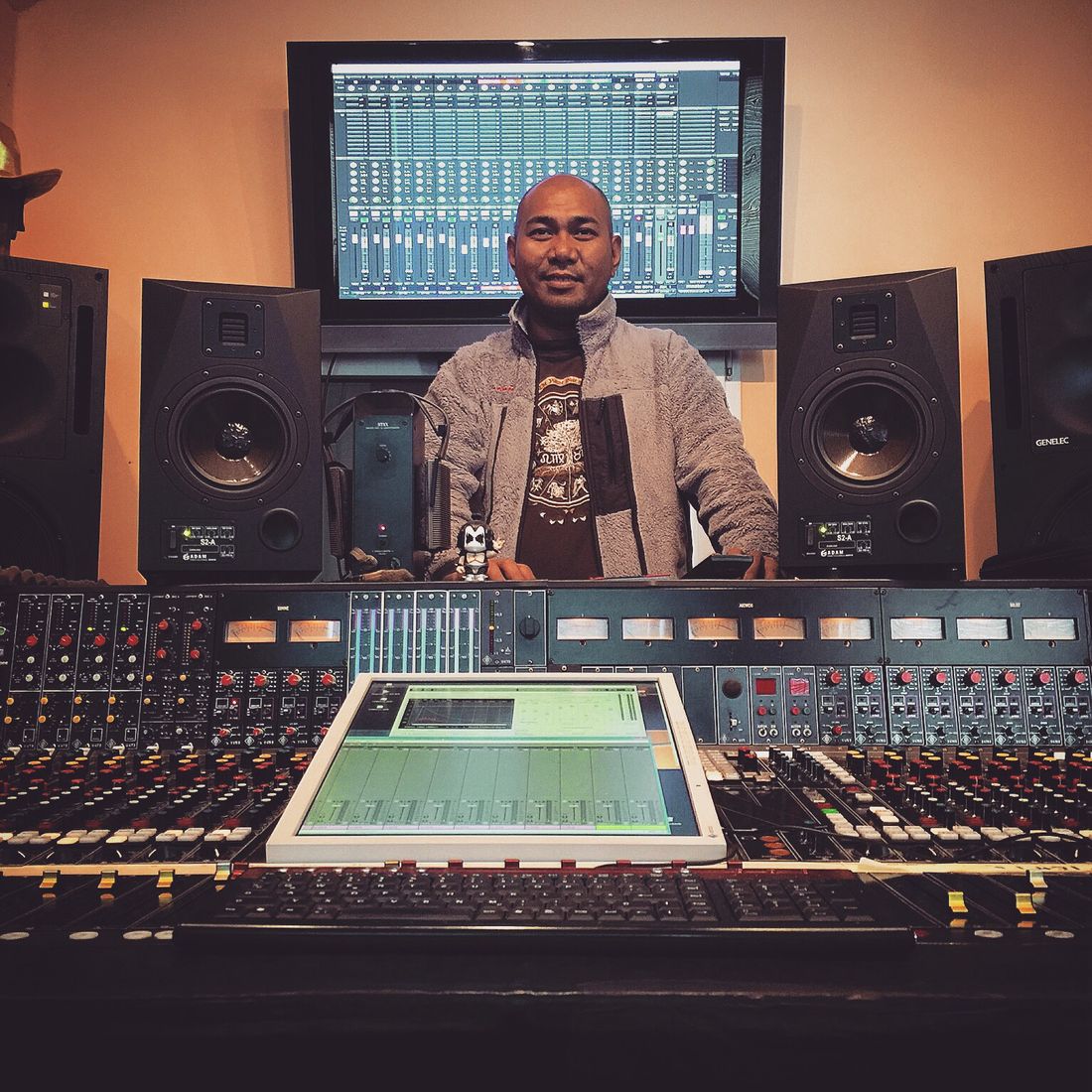
Then have it built properly. That's the Demo-to-Master service at RAMTUNES: you send the sketch and a short note on what must survive, and it comes back as an original human-authored composition — composed, performed, and produced from scratch — that lands in the same emotional place.
What you get back is a master you actually own: copyrightable, genuinely exclusive, free of watermarking and fingerprinting, delivered with full stems, alternate edits, and complete metadata, as 100% One-Stop — master and publishing under one signature — with a written human-authorship warranty if your client's legal team needs one.
It is not a remix of your file. It's a new piece of music that does the job your file was auditioning for.
One last thing about AI, honestly
RAMTUNES uses AI. It is used in marketing, research, and day-to-day admin, and saying otherwise would be theatre. What it is not used for is composing, performing, or producing music — and the reason is not sentimental. It's that the authorship is the product. Human authorship is what makes the work protectable, and protection is what makes the licence, the exclusivity, and the warranty worth anything to the person buying them.
Every composition, performance, and arrangement delivered by RAMTUNES is authored by a human. Standard studio tools — mastering processors, virtual instruments, restoration software, many of which contain machine-learning components — are used as engineering tools, exactly as they are across the professional industry. That distinction between authorship and tooling is the one that survives a client's compliance questionnaire, and it's the one worth getting right.
FAQ
No — those are two different things. The Warner, BMG and Believe deals cover how the models are trained and how finished tracks can be distributed. They do not change the copyright status of the audio you personally generate. Copyright protection generally requires human authorship, so a wholly machine-generated track has little or nothing to protect, regardless of how the model was trained. Licensed training data fixed an ethics problem. It did not create an ownership right you can pass to a client.
For personal or low-stakes use, it often doesn't. It matters the moment someone else needs to rely on your rights — a broadcaster, an agency, a distributor, a brand's legal team. They are not asking whether the music is good. They are asking whether you can grant them permission, warrant that grant, and indemnify them if it turns out you couldn't. If you have nothing to own, you have nothing to grant.
Not reliably. Editing an unprotectable recording doesn't make the underlying material protectable — at best you may have rights in your own additions, which leaves you with a messy, partial claim that is difficult to warrant and worse to explain to a music supervisor. Stem separation and upscaling also tend to preserve any watermarking or fingerprinting present in the source. The clean route is a new human-authored composition that lands in the same emotional place.
Licensed AI music services now embed audio watermarking and fingerprinting in their outputs, and platforms are increasingly labelling wholly AI-generated music. For a brand campaign, a broadcast placement, or a trailer, that means the provenance of the music can be detected downstream — after the spend, after the approval, after it has aired. Most buyers would rather avoid that conversation entirely.
It is a RAMTUNES service for clients holding an AI sketch they cannot own or clear. You send the sketch and a short brief on what you want kept — mood, structure, tempo, the moments that matter. RAM rebuilds it as an original human-authored composition, delivered with full stems, alternate edits, and complete metadata, as 100% One-Stop with a written human-authorship warranty. It is a new composition, not a remix or re-render of the AI file.
This article describes commercial and delivery practice in music licensing and is not legal advice. Copyright treatment of AI-assisted works continues to develop and varies by jurisdiction — for a specific project, take advice from a qualified lawyer in the relevant territory.